

About Me
About the Author
Gina Stevens author writes about responsibility inside relationships, the consequences of impulsive words, and what happens when pride lasts longer than clarity. Her books are rooted in lived experience, not theory.
Turn the Page spans 1970 to 2025 and traces decades of family life, personal error, and eventual accountability. It documents the unraveling of certainty and the uncomfortable work of owning one’s part in fractured relationships.
In How to Not Make Things Worse, Gina Stevens author focuses on restraint. The book examines how ordinary reactions can quietly escalate conflict and damage relationships that might otherwise have been repaired. It is practical, direct, and grounded in experience.
Estranged addresses long-term distance within families. It speaks to readers navigating estranged relationships without offering easy answers. The book acknowledges grief while insisting on personal responsibility.
Beyond memoir, Gina Stevens author is developing the Gina & Sissy series, a character-driven project centered on loyalty, childhood bonds, and the early foundations of relationships. The series offers a different lens while remaining grounded in real human behavior.
Gina Stevens also collaborates with Robert Herget on constitutional and civic topics, providing editorial structure and design guidance. That partnership reflects her broader interest in accountability beyond personal relationships.
Readers can buy on Amazon and explore her work across memoir, reflection, and fiction. Whether examining estranged family dynamics or everyday communication breakdowns, Gina Stevens author writes with clarity, restraint, and a commitment to truth.

About Turn the Page
This book follows one woman’s life from 1970 to 2025.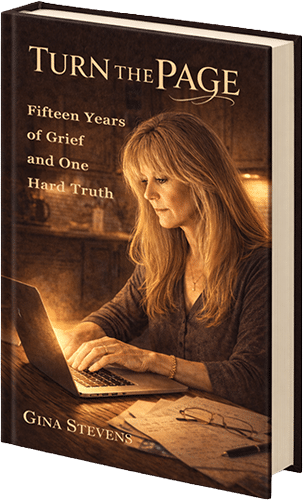
It is a story about family, friendships, mistakes, humor, and the ordinary moments that quietly define who we become. Childhood gives way to adulthood. Relationships change. Some people stay. Others leave. Time keeps moving whether we are ready or not.
With distance comes perspective. Arguments that once felt urgent lose their importance. Old hurts shrink. What remains are the people, the stories, and the small choices that added up while no one was paying attention. There are good years and hard ones, closeness and distance, love that holds and love that fails.
This is not a book about perfection. It is about living long enough to understand what mattered and what did not. About learning when to hold on, when to let go, and when to laugh at things that once felt overwhelming.
If you have ever looked back on your life and seen it differently than you once did, this book will feel familiar. It is a reminder that time moves fast, memory is selective, and the things we forgive, remember, and carry forward shape us more than we realize.
About Gina & Sissy
The Gina & Sissy books grew out of memory, mischief, and the kind of childhood freedom that existed before adults tracked everything. They’re loosely rooted in real experiences, exaggerated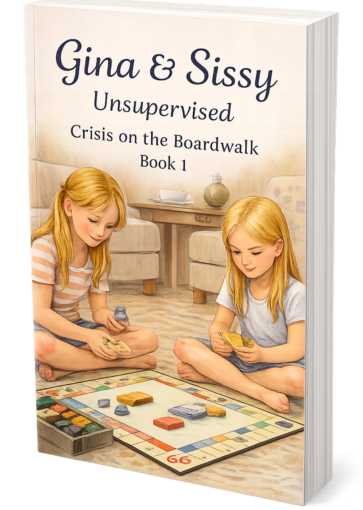 where necessary, and told with affection for the messiness of growing up.
Gina and Sissy are not perfect kids. They get bored, make questionable choices, misunderstand situations, and learn things the long way around. They argue, scheme, wander off, and usually mean well. The stories are playful on the surface, but they carry the quiet truths of friendship, loyalty, embarrassment, and figuring things out without a manual.
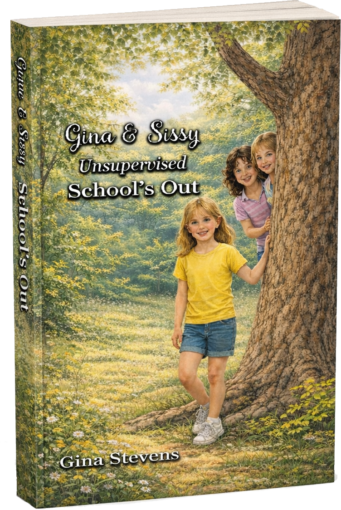
I didn’t set out to write lesson books. I wrote stories that feel honest to childhood. The kind where kids aren’t tiny adults and adults don’t always have the right answers. Humour shows up because it belongs there. So do consequences.
These books are for readers who remember what it felt like to be young and unsupervised, and for kids who are still figuring out where they fit. If that sounds familiar, you’ll probably recognize something here.
Lost, Found, & Loved Again
When little Gina receives her very first purse, a shiny black treasure filled with three special coins and a secret note from her grandmother, she carries it with all the love in her heart. But one hurried afternoon, the purse is accidentally left behind at a local drug store… and disappears.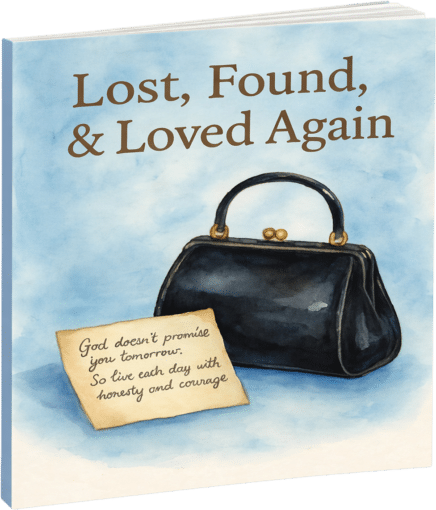
Years pass. Life moves on.
And then, in the most unexpected place, the purse finds its way back to Gina still holding the memory tucked deep inside its lining.
Inspired by a true childhood moment, Lost, Found, & Loved Again is a tender, beautifully illustrated story about the things we lose, the love we keep, and the quiet magic that returns to us when we need it most. With soft watercolor artwork and gentle storytelling, this heartfelt picture book is perfect for bedtime reading, classroom sharing, grandparents, and anyone who believes in the lasting power of love.
Estranged
A mother’s reckoning with distance, pride, and the cost of being wrong.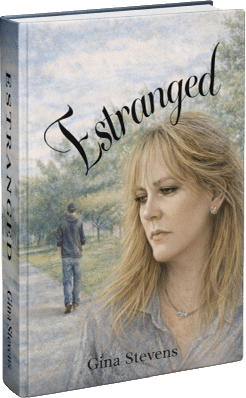
Estranged is an unflinching exploration of what happens when love and fear collide inside a family.
For years, Gina believed she understood what had fractured her relationship with her son. She believed she knew where the break began. She believed she was defending what mattered most.
She was defending the wrong things.
This book traces the emotional terrain of long-term estrangement, not as a single event, but as a slow unraveling shaped by pride, panic, assumptions, and unexamined wounds. It confronts the damage that can be done in the name of love, the difference between intention and impact, and the painful realization that being certain does not mean being right.
Through reflection, accountability, and a series of direct open letters, Estranged examines:
• the psychology of maternal fear
• generational patterns that repeat when left unchallenged
• the tension between loyalty and autonomy
• the shame that follows defensiveness
• and the long silence that reshapes identity
There is grief here. There is regret. There is faith. There is ownership.
Estranged does not offer easy resolution. It offers honesty. It asks difficult questions about responsibility, reconciliation, and what remains when a relationship does not return.
For parents navigating distance.
For adult children seeking perspective.
For anyone who has replayed a family rupture and wondered where it truly began.
How To NOT Make Things Worse
A field guide to restraint when emotions are running hot.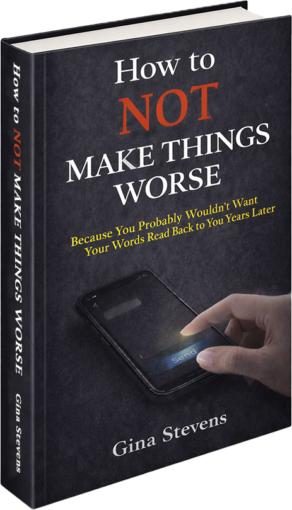
Most damage is not done by monsters.
It is done by people who are hurt, scared, or certain they are right.
How To NOT Make Things Worse is a direct, practical examination of what happens in the moments when emotions take over and impulse replaces judgment. It focuses on the seconds before the text is sent, the email is fired off, the accusation is made, or the relationship crosses a line it cannot easily return from.
This is not theory. It is lived experience.
Drawing from hard-earned lessons inside family conflict, estrangement, divorce, and pride-fueled arguments, Gina Stevens lays out the patterns that escalate situations unnecessarily and the discipline required to stop them.
Inside you’ll find:
• how fear disguises itself as urgency
• why needing to be understood often creates more misunderstanding
• the difference between intention and impact
• when silence is strength
• and how restraint protects relationships more than persuasion ever will
This book does not teach manipulation.
It teaches pause.
It teaches responsibility.
It teaches how to recognize the moment before regret.
For parents.
For partners.
For anyone who has ever said, “I shouldn’t have sent that.”
Sometimes growth begins with one simple decision:
Do not make this worse.